
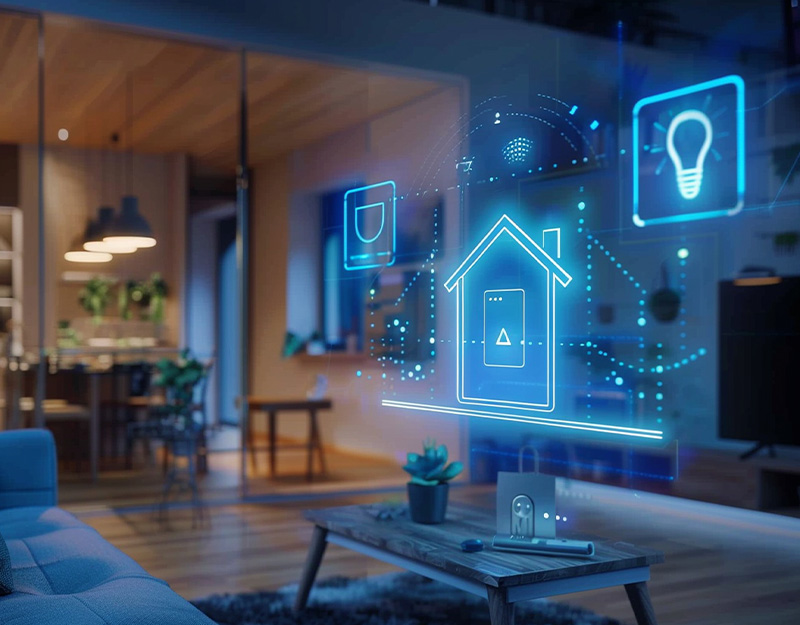
In an age of advanced technology, the concept of a smart home is no longer just a luxury; it has become a necessary step toward a more comfortable, secure, and efficient life. Thanks to the variety of smart devices available today, what exactly is a smart home?
A smart home refers to homes equipped with network-connected devices that allow you to control them remotely. You can manage lighting, save energy, enhance security, and easily handle your daily tasks, whether through your smartphone or voice commands. In this article, we’ll explore how to transform your traditional home into a smart home using the latest available technologies, improving your quality of life and making your home more interactive and advanced.
Smart homes can be created using both wired and wireless systems, allowing you to control all aspects of your home from the comfort of your couch. You can even monitor what’s happening at home while you’re at work—what are your kids doing? Has someone broken into the house? It’s truly an amazing experience.
The Benefits of Smart Homes
- Effortless Home System Control: With smart homes, you can easily manage and modify your entire home system without any physical effort, often just from your mobile phone. Imagine being able to activate the heating system in winter or the cooling system in summer while you’re still at work.
- Enhanced Security: Smart door and window locking systems provide a higher level of security compared to traditional homes, both for you and your children. You can travel or go to work without worrying about your home being burglarized, as you can control the opening and closing of your doors and windows from anywhere. This system also alerts you to anyone entering or leaving your home, whether you’re inside or away.
- Alarm Activation: Smart alarms offer additional safety for you and your family. These alarms are highly sensitive and will alert you to events such as a break-in or a fire, ensuring your home is protected.
- Protecting Electrical Appliances: How often have your electrical appliances been damaged due to power surges? Smart control systems allow you to regulate electricity flow to protect all your devices from sudden surges. You can even turn off a forgotten iron with just one button! This adds a layer of safety and security.
- Reduced Energy Costs: No need to dread the electricity bill at the end of the month. Smart heating and cooling systems help reduce electricity consumption by allowing you to control your devices remotely and manage room lighting efficiently.
- Time-Saving: Give yourself some extra downtime; smart devices reduce the effort and time spent on daily tasks, as you can control everything from your smartphone, no matter where you are.
How Smart Homes Have Contributed to Energy Savings
Smart homes are designed to maximize energy efficiency, reducing energy consumption by up to 30-40% compared to traditional homes. The intelligence behind the use of devices and activities within the home offers several benefits:
- Monitoring all temperature levels by tracking your movements within the home.
- Adjusting the temperature only in rooms that are being used.
- Modifying lighting systems based on your activities in each room.
- Monitoring the energy usage of your home appliances and adjusting consumption rates according to your needs.
Tips for Converting Your Traditional Home into a Smart Home
Making your home smarter is no longer as difficult or expensive as it used to be. With a wide range of smart devices available today that work together to improve your daily life, you can create a safe, comfortable, and energy-efficient home environment. All you need to do is start with simple steps and choose the devices that suit your needs and budget. Here are some tips:
- Integrating Smart Appliances: You can integrate smart household appliances like refrigerators, washing machines, and vacuum cleaners into your smart home system. These devices offer features such as remote control, performance monitoring, and energy savings. For instance, smart refrigerators can notify you when you’re running low on groceries or if there’s an issue with the appliance.
- Installing Smart Thermostats: These devices allow for more efficient temperature control in your home. Smart thermostats learn your daily routines and automatically adjust the temperature to save energy and enhance comfort. You can control the system remotely via your smartphone or set schedules that align with your daily routine.
- Using Smart Lighting Systems: To make your home smarter, consider using smart lighting systems. These systems let you control the lights via smartphone apps or voice commands. You can program the lights to operate automatically based on a specific schedule or even in response to movement in the room.
- Implementing Smart Locks: Smart locks add an extra layer of security to your home. You can lock or unlock doors remotely using your phone, provide temporary codes for visitors, and receive alerts when the door is opened. In addition to smart locks, there are comprehensive security systems that include smart cameras and sensors to monitor your home and notify you of any unusual activity.
- Smart Irrigation Systems: If you have a garden, using a smart irrigation system can help keep your plants healthy while conserving water. These systems use weather and humidity data to determine the appropriate amount of water for your plants and automatically water them without your intervention.
- Enhancing Home Entertainment: For a smarter home entertainment experience, consider using devices like smart TVs and integrated home sound systems. These devices can connect to the internet and provide diverse, high-quality content, with remote control options via smartphones or voice assistants.
- Smart Surveillance Cameras: Smart surveillance cameras can be a crucial part of your smart home security system. These cameras can send notifications to your phone when motion is detected, record video, and store it in the cloud for access at any time.
With a Smart Home: Protect Yourself and Your Home from Intruders
One of the biggest concerns for people living in unsafe areas or those who spend most of their time away from home is the risk of burglary. So, how can you protect your home from intruders with a few simple steps?
- Invest in Essential Security Devices: Purchase necessary security devices like smart speakers, thermostats, a smart doorbell, and security cameras. These devices combine convenience, security, and privacy.
- Secure Your Wi-Fi Network: Connect these devices to your wireless internet, but ensure your Wi-Fi network is protected with a strong password, as routers generally have weak security. You can consult professionals for assistance.
- Update Firmware on Security Devices: Firmware is the low-level software that runs your router and other Internet of Things (IoT) devices. You can access the firmware settings on your router to change the password from the settings menu.
Thus, a smart home offers many advantages beyond just saving time, effort, and cost—it ensures the safety of your family and property, allowing you to enjoy a higher standard of living with greater peace and comfort.
The Smart Home Assistant
What a great idea! Have you considered getting a home assistant to control everything in your home? If you’re truly looking to make your home smarter, a home assistant is a must-have. A home assistant is a digital helper that can control everything in your home, from lights to the security system.
There are many home assistants available on the market today, but the most popular are Amazon’s Alexa and Google’s Google Home. Both devices are easy to use and allow you to control them using only voice commands.
One of the standout features of a home assistant is its ability to control all your smart devices. For example, if you have a smart thermostat, you can simply ask the assistant to raise or lower the temperature. Similarly, if you have smart lights in your home, you can turn them on or off with a voice command.
Another great feature of having a home assistant is the ability to easily set timers and alarms. If you need to wake up early for work, you can ask the assistant to set an alarm for the desired time. Or, if you’re cooking dinner, you can instruct the assistant to remind you when it’s time to take the food out of the oven.
Overall, having a home assistant is an effective way to turn your home into a smart home. With a home assistant, you can control all your smart devices, set timers and alarms, and perform many other tasks with ease and convenience.
In conclusion, transforming your home into a smart home is a long-term investment in your comfort and well-being. With the continuous advancement of technology, it has become easier to turn your home into an interactive space that enhances your daily experience. From controlling lighting and appliances to enhancing security and saving energy, smart devices give you the ability to manage your home more efficiently and in a way that meets your personal needs. So, whether you’re starting from scratch or adding smart touches to your existing home, moving to a smart home is a step towards a more connected and comfortable future.
